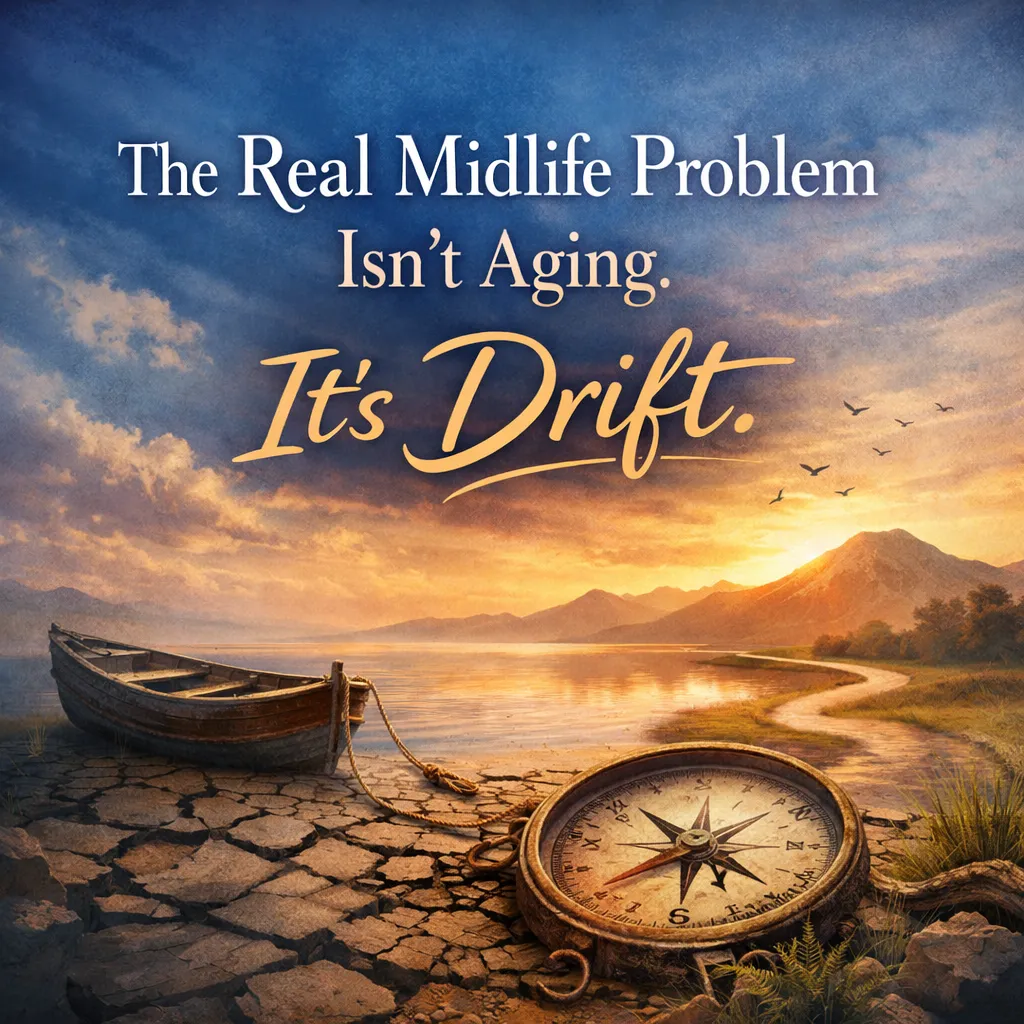
The Real Midlife Problem Isn’t Aging. It’s Drift.
Most people assume midlife discomfort is about getting older. Less energy. Fewer options. More responsibility. But in practice, that’s rarely the real issue. The deeper problem is drift: losing a clear internal compass while continuing to live inside patterns that no longer fit.
Drift happens slowly. You build a life around roles that once made sense—career, family, identity, expectations. For years, those structures work. They provide direction, status, and meaning. Then one day, often without a dramatic trigger, they stop feeling true. You’re still functioning, still achieving, still doing what’s expected—but something feels off. Not broken. Just misaligned.
This is identity drift. You’re no longer who you were when those choices were made, but your life is still organized around that older version of you. The discomfort that follows is often mislabeled as burnout, boredom, or a crisis. In reality, it’s a systems problem, not a personal failure. Your internal software has updated, but your external life is still running an outdated operating system.
Biological aging gets blamed because it’s visible and convenient. But psychological misalignment is what actually creates the unease. You haven’t lost potential. You’ve lost clarity. The question isn’t “What’s wrong with me?” It’s “What am I currently living that no longer reflects who I am?”
Reframing midlife this way is stabilizing. It removes the drama and the shame. You’re not broken. You’re not behind. You’re simply navigating a period where your internal identity has evolved faster than the structures around it.
Midlife isn’t a collapse. It’s a signal. A request for recalibration. Not to burn everything down—but to realign your life with the person you’ve quietly become. That’s not a crisis. That’s a systems upgrade waiting to happen.


