The Emotional Economics of Your Life
The Emotional Economics of Your Life
By midlife, most people understand financial budgets. They know income, expenses, reserves, and risk. What often goes unnoticed is that life runs on another economy just as real—and far more consequential: emotional economics.
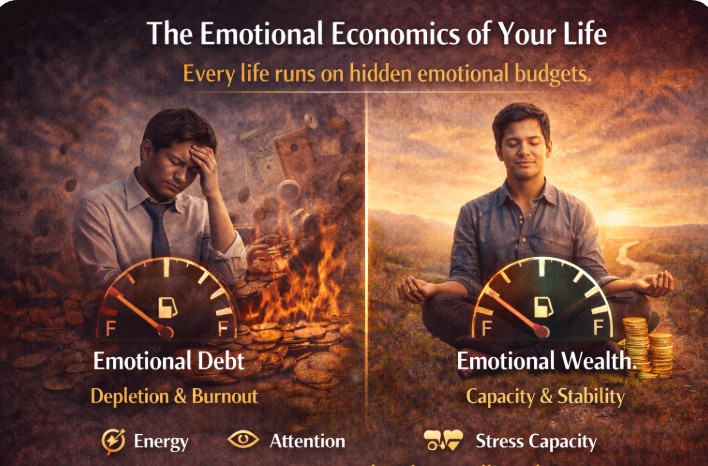
Every decision you make draws from invisible accounts. Energy. Attention. Tolerance for stress. When those resources are managed well, life feels steady and responsive. When they’re mismanaged, even a “successful” life can feel heavy, brittle, and exhausting.
This isn’t a character issue. It’s a structural one.
Early in life, emotional overspending is easier to ignore. Energy rebounds faster. Stress feels temporary. There’s a belief—sometimes necessary—that you can outwork imbalance. Over time, though, the math changes. Emotional withdrawals take longer to replenish. Attention fragments more easily. Stress lingers instead of clearing.
Burnout rarely arrives suddenly. It accumulates like debt. Emotional debt builds when effort consistently exceeds recovery. When obligations pile up without corresponding relief. When you keep spending emotional currency on roles, relationships, or expectations that no longer generate return. On paper, everything may look fine. Internally, the system is running on credit.
This is why burnout shouldn’t be moralized. It isn’t a failure of grit, gratitude, or resilience. It’s the predictable outcome of an unbalanced emotional budget.
The shift at this stage of life is learning to manage emotional spending as deliberately as financial spending. Strategic restructuring doesn’t mean withdrawing from life or lowering standards. It means reallocating resources toward what actually sustains you.
That can look like reducing exposure to chronic stressors, simplifying commitments that drain disproportionate energy, or protecting attention from constant fragmentation. It also means investing in recovery with the same seriousness you invest in productivity. Rest becomes a strategic asset, not a reward you earn after depletion.
When emotional economics are brought into alignment, clarity improves. Decision-making sharpens. Capacity returns—not because you pushed harder, but because the system is no longer leaking energy.
If this resonates—if you recognize patterns of emotional overspending and quiet depletion—there is a free Vision Workshop and a complimentary Strategy Call available. They’re designed to help you map your emotional budget, identify sources of debt, and redesign how energy and attention are allocated going forward.
No judgment. No hustle culture. Just clearer structure for a stage of life that demands sustainability, not heroics.
Burnout isn’t who you are.
It’s feedback from the system—and systems can be redesigned.


