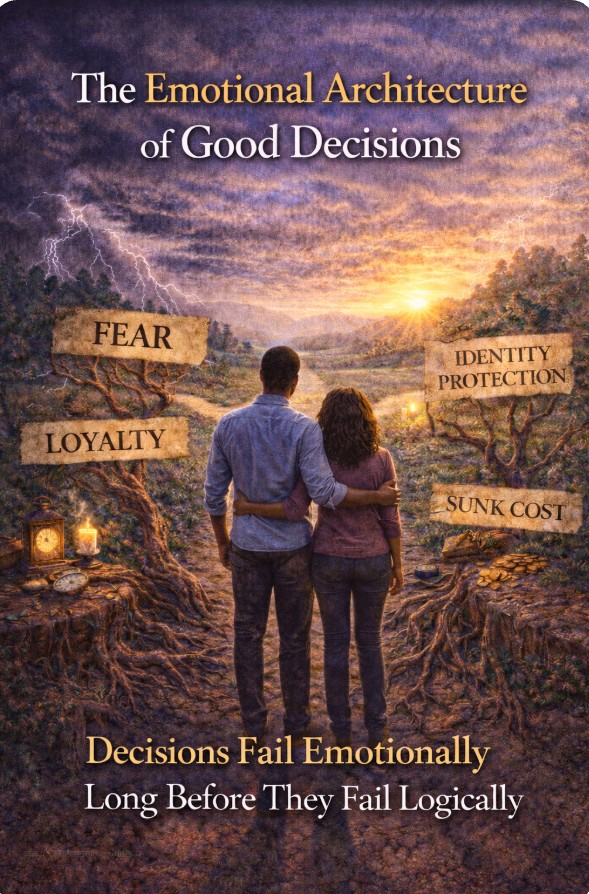
The Emotional Architecture of Good Decisions
The Emotional Architecture of Good Decisions
Most people assume decisions fail because the logic was wrong. The data was incomplete. The plan was flawed. The timing was off. But in practice, decisions rarely collapse for logical reasons. They fail emotionally—often long before logic ever gets a chance to do its job.
You can make a decision that is rational, well-researched, and objectively sound, and still find yourself unable to follow through. Not because you’re weak or inconsistent, but because your nervous system never agreed to the plan.
Good decisions aren’t just logical structures. They are emotional architectures.
The Hidden Forces That Undermine Decisions
Internal resistance usually doesn’t show up as fear screaming in all caps. It shows up as reasonable excuses. Delays. Overthinking. “Just one more month.” These responses feel rational, which is why they’re so effective at keeping you stuck.
A few forces are almost always at play:
Fear: Not just fear of failure, but fear of destabilization. Fear of regret. Fear of being wrong publicly. Fear of losing identity or belonging.
Loyalty: To people, roles, organizations, or versions of yourself that once mattered. Loyalty can quietly override what you know is right.
Sunk cost: The belief that time, money, or effort already invested must be protected, even when continuing no longer makes sense.
Identity protection: Decisions that threaten how you see yourself—or how others see you—often trigger resistance, regardless of logic.
None of these forces are irrational. They are protective. Your system is trying to maintain safety, coherence, and continuity.
How “Reasonable” Excuses Become Self-Sabotage
Self-sabotage rarely looks dramatic. It looks sensible.
You tell yourself you’re being cautious. Responsible. Thoughtful. You gather more information. You wait for certainty. You postpone until conditions are perfect. On the surface, this looks like discipline. Underneath, it’s avoidance dressed up as wisdom.
This is why people can articulate exactly what they want and still fail to act. Logic isn’t the problem. Emotional capacity is.
A decision your nervous system can’t tolerate will be quietly undermined—through procrastination, distraction, or endless reconsideration.
Designing Decisions Your Nervous System Can Support
If decisions fail emotionally, then better decisions require better emotional design.
This doesn’t mean lowering standards or avoiding challenge. It means creating paths forward that your system can metabolize without triggering shutdown or panic.
A few principles help:
Reduce identity threat: Separate who you are from what you’re changing. You are not abandoning your past; you are updating your direction.
Lower the perceived risk: Pilot instead of leap. Test instead of commit. Movement doesn’t have to be irreversible to be meaningful.
Honor loyalty consciously: Acknowledge what you’re afraid to disappoint. Naming loyalty reduces its unconscious power.
.Sequence change: Don’t ask your nervous system to absorb financial, relational, and identity risk all at once.
Good decisions feel supportive, not violent. Stretching, not shattering.
A Different Relationship With Resistance
Resistance is not proof you’re wrong. It’s information.
When you stop judging resistance and start listening to it, decisions become collaborative rather than combative. You’re no longer forcing yourself forward. You’re designing change in a way your whole system can stand behind.
The goal isn’t to eliminate fear. It’s to make decisions that are emotionally sustainable.
When logic and emotional capacity align, follow-through stops being a struggle—and good decisions finally get a chance to succeed.
If this conversation resonated, you don’t have to work through it alone. Understanding the emotional architecture behind your decisions can bring relief, but clarity often deepens when you slow down and explore it intentionally. You’re invited to attend a complimentary Vision Workshop or schedule a private Strategy Session to examine what’s creating internal resistance, identify what truly matters now, and design next steps your whole system can support. These conversations are not about pressure or quick fixes. They’re about creating alignment, reducing self-judgment, and moving forward with confidence that feels steady and sustainable


